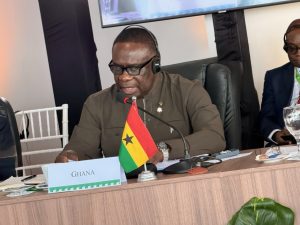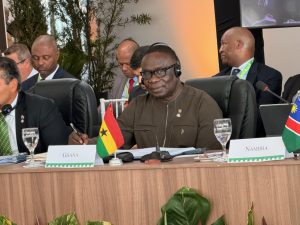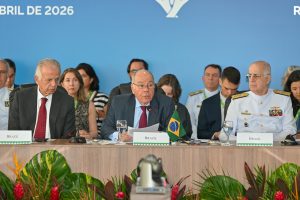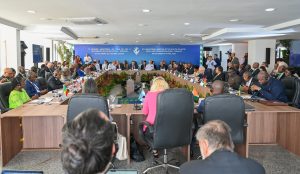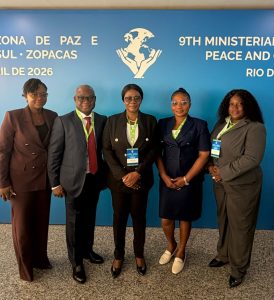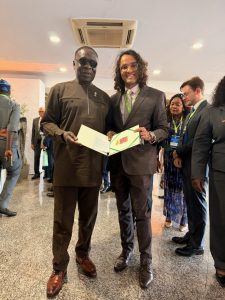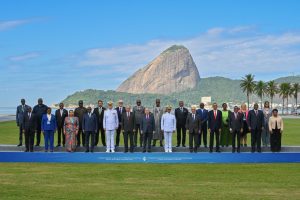
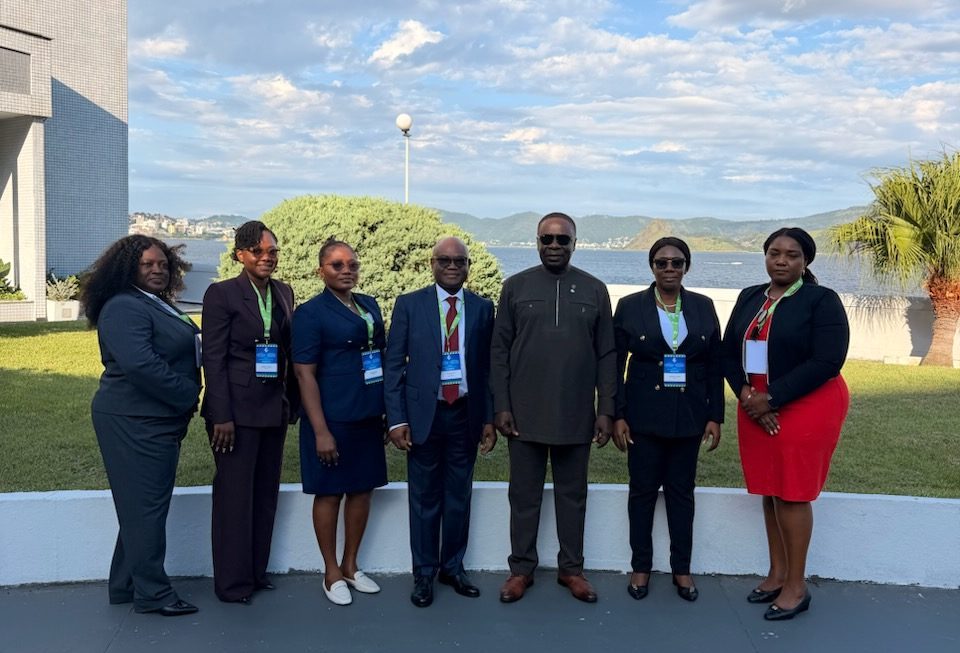
Honourable James Gyakye Quayson, Deputy Minister for Foreign Affairs, led Ghana’s delegation to the IX Ministerial Meeting of the Zone of Peace and Cooperation of the South Atlantic (ZOPACAS), held in Rio de Janeiro, Brazil, from 7th to 10th April 2026.
The Meeting reviewed the Mindelo Plan of Action, streamlining it into three key actionable pillars, while incorporating emerging priorities such as maritime security, transnational illicit activities, ocean governance, climate change, global commons, and peace and security in the South Atlantic.
At the conclusion of the Meeting, 21 out of 24 Member States present adopted two key outcome documents: the Rio de Janeiro Declaration and the Rio de Janeiro Cooperation Strategy, aimed at revitalizing ZOPACAS and enhancing practical cooperation among Member States.
During the Plenary Session, Ghana successfully advocated for the inclusion of the recently adopted United Nations General Assembly Resolution A/RES/80/250, which recognizes the trafficking of enslaved Africans and racialized chattel enslavement as among the gravest crimes against humanity, in the final Declaration. This was overwhelmingly endorsed by Member States, making ZOPACAS one of the first international platforms beyond the United Nations to formally reflect and reinforce this historic recognition.
Ghana’s statement also emphasized the importance of linking the maritime domain awareness systems of the Yaoundé Architecture in the Gulf of Guinea with those of ZOPACAS Member States across the South Atlantic. This integration, particularly under Cluster 6 of the ZOPACAS Cooperation Strategy, is expected to significantly enhance information sharing, real-time surveillance, and the tracking of vessels of interest, thereby contributing to safer, more secure, and better-coordinated maritime spaces across the region.
In light of persistent security threats in international waters, the Deputy Minister reaffirmed Ghana’s commitment to maintaining the South Atlantic as a Zone of Peace, highlighting the ripple effects of maritime insecurity on international shipping routes, trade flows, and global economic stability.